In short:
• Roadside assistance typically covers jump starts, flat tire changes, fuel delivery, lockouts, and winch-outs for stranded drivers.
• Response usually starts with a phone call describing the vehicle, location, and problem, followed by dispatch and an estimated arrival time.
• Staying off the active roadway and using hazard lights while you wait improves safety during any breakdown.
A driver who calls for help can generally expect a short intake call, a dispatched technician, and an on-site fix or tow within a defined response window. Knowing this sequence in advance reduces stress when a vehicle actually breaks down.
Requesting Roadside assistance services Indianapolis IN usually begins the moment a vehicle stalls, won’t start, or gets a flat tire on the shoulder of a road. The caller explains the situation, shares a location, and a dispatcher sends a driver equipped to handle common breakdown scenarios. Providers in the Indianapolis area commonly handle jump starts, tire changes, lockouts, fuel delivery, and winch-outs for vehicles stuck in ditches or similar spots.
The Call: What Information Gets Asked
A dispatcher needs a handful of details before a technician can be sent. Having this ready speeds up the entire process.
• Vehicle make, model, and color
• Exact location or nearest cross streets/mile marker
• Description of the problem (flat tire, dead battery, lockout, etc.)
• Number of passengers waiting with the vehicle
Clear answers to these questions help the dispatcher match the right equipment to the job before a driver ever leaves the yard.
Arrival and Service: What Happens On-Site
Once a technician arrives, the actual service depends on the type of breakdown. Jump starts and tire changes are often finished within minutes, while lockouts and winch-outs may take a bit longer depending on vehicle positioning.
| Service Type | Typical On-Site Task | Rough Time Frame |
| Jump start | Connect battery pack or jumper cables | 10-15 minutes |
| Flat tire change | Swap to spare tire | 15-20 minutes |
| Lockout | Unlock vehicle without damage | 10-20 minutes |
| Winch-out | Pull vehicle from ditch or soft ground | 20-40 minutes |
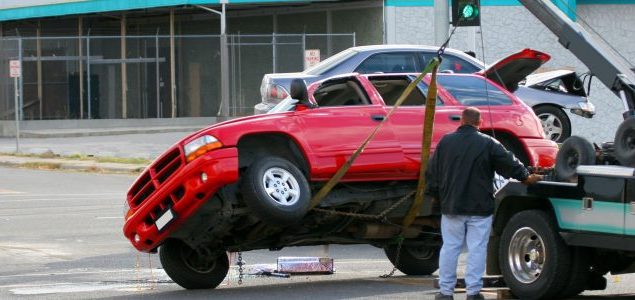
Technicians typically check that the vehicle is safe to drive before leaving the scene. If the issue cannot be resolved roadside, a tow to a repair shop is usually the next step.
Staying Safe While You Wait
Safety guidance from the National Highway Traffic Safety Administration recommends pulling as far off the travel lane as possible and keeping hazard lights on while waiting for help. A stocked emergency kit with items such as a flashlight, jumper cables, and a tire gauge can also make a breakdown easier to manage until assistance arrives.
• Move the vehicle to the shoulder or a parking area if it’s drivable
• Turn on hazard lights immediately
• Stay inside the vehicle with a seatbelt fastened if traffic is heavy nearby
• Exit on the passenger side away from traffic when leaving the vehicle
Following these steps lowers the risk of a secondary incident while waiting for a technician.
What Comes After Service
Once the immediate problem is resolved, it’s worth confirming the vehicle is operating correctly before driving away. A technician should explain what was done and flag any issue that might need follow-up at a repair shop. Keeping a record of the service call, including time and location, is useful if a warranty or insurance claim becomes relevant later.
Frequently Asked Questions
How quickly does roadside assistance usually arrive? Response times vary by location, traffic, and technician availability, so it’s reasonable to ask the dispatcher for an estimated arrival window during the initial call.
Can roadside assistance help with a car that won’t start at all? Yes, in many cases a jump start resolves the issue on the spot; if the battery or starter is beyond a simple jump, the vehicle may need a tow to a shop.
What if my vehicle is stuck off the road, like in a ditch? A winch-out service is designed for exactly this situation, using a cable and winch to pull the vehicle back onto solid ground.
Is roadside assistance different from towing? Roadside assistance covers quick on-site fixes like tire changes or jump starts, while towing involves transporting the vehicle when it cannot be driven safely.
Getting Help When You Need It
A breakdown is rarely convenient, but knowing what to expect from the call to the fix makes the experience less stressful. JR’s Services And Recovery LLC is a locally operated towing and roadside provider serving the Indianapolis area with jump starts, tire changes, lockout help, fuel delivery, and winch-out assistance. Drivers who want a closer look at how heavy-duty vehicle recovery works can Read More on related recovery procedures.